
100+ Daily English Phrases for Everyday Conversations (With Meanings and Examples)
Learn common English phrases with simple explanations, Urdu meanings, practical examples, real-life dialogues, idioms, and speaking practice.
- 105+ useful phrasesGreetings, questions, requests and everyday responses
- Real-life situationsHome, shopping, travel, school and workplace English
- Meaning and practiceUrdu translations, dialogues and speaking exercises
Introduction: Why Learning Daily English Phrases Matters
Knowing individual English words is useful, but knowing how to combine them into natural expressions is just as important. In everyday communication, people often use familiar groups of words instead of building every sentence from the beginning. This guide brings together daily English phrases, common expressions, and practical sentences for everyday speaking. You can use the examples at home, in class, at work, while shopping, and in ordinary conversations. The daily English phrases in this guide are selected for practical communication, so learners can understand not only what an expression means but also when it sounds natural.
For example, rather than translating every word from Urdu, you can learn expressions such as:
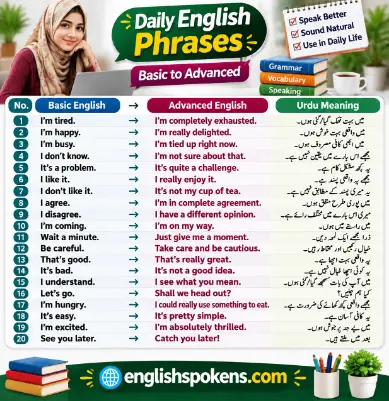
- How’s it going? — کیا حال ہے؟
- Could you help me? — کیا آپ میری مدد کر سکتے ہیں؟
- That sounds great. — یہ بہت اچھا لگتا ہے۔
- I’ll be right back. — میں ابھی واپس آتا ہوں۔
- Let me think about it. — مجھے اس بارے میں سوچنے دیں۔
To learn an expression properly, focus on three things:
- Meaning: Understand what the expression communicates.
- Context: Know when and with whom it is appropriate.
- Application: Use it in a complete sentence or short conversation.
For Urdu-speaking learners, a natural Urdu meaning can make an unfamiliar expression easier to understand. However, avoid translating every word separately: the natural meaning of a phrase may be different from its literal wording.
100+ Common Daily English Phrases with Meanings
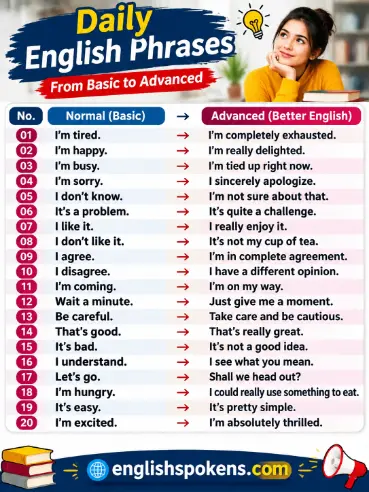
These expressions are grouped by communication purpose. Each phrase includes a simple meaning and an Urdu equivalent. Read the examples aloud to understand how the expressions work in real conversations. These common daily English phrases are useful starting points for greetings, small talk, asking questions, giving opinions, and ending conversations politely.
Greetings and Introductions
Use these phrases when meeting someone, welcoming a person, or starting a conversation.
| English phrase | Simple meaning | Urdu meaning |
|---|---|---|
| 1. Hello! | A common greeting. | ہیلو! |
| 2. Good morning! | A greeting used in the morning. | صبح بخیر! |
| 3. Good afternoon! | A greeting used in the afternoon. | دوپہر بخیر! |
| 4. Good evening! | A greeting used when meeting someone in the evening. | شام بخیر! |
| 5. How are you? | Asking about someone’s condition. | آپ کیسے ہیں؟ |
| 6. How’s it going? | A casual way to ask how things are. | سب کیسا چل رہا ہے؟ |
| 7. Nice to meet you. | Expressing pleasure at meeting someone. | آپ سے مل کر خوشی ہوئی۔ |
| 8. Long time no see. | Saying you have not seen someone for a while. | کافی عرصے بعد ملاقات ہوئی۔ |
| 9. Welcome! | Greeting someone who has arrived. | خوش آمدید! |
| 10. How have you been? | Asking how someone has been recently. | آپ کیسے رہے ہیں؟ |
A: Good morning! How are you?
B: I’m fine, thank you. How about you?
A: I’m doing well. Nice to see you again!
Everyday Small Talk
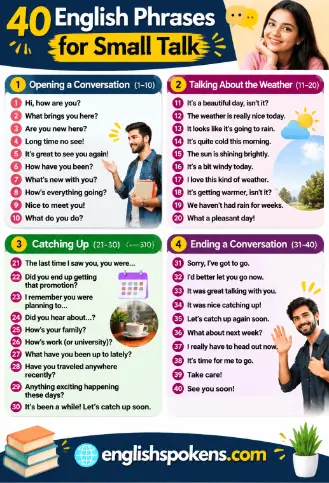
Small talk helps you start informal conversations and keep them going without discussing anything particularly serious.
| English phrase | Simple meaning | Urdu meaning |
|---|---|---|
| 11. What’s up? | Asking what is happening. | کیا چل رہا ہے؟ |
| 12. What are you up to? | Asking what someone is doing. | آپ کیا کر رہے ہیں؟ |
| 13. How’s your day going? | Asking about someone’s day. | آپ کا دن کیسا گزر رہا ہے؟ |
| 14. Not much. | Nothing special is happening. | کچھ خاص نہیں۔ |
| 15. Same as usual. | Things are happening as they normally do. | ہمیشہ کی طرح۔ |
| 16. That’s interesting. | Showing interest in something. | یہ دلچسپ ہے۔ |
| 17. Really? | Showing surprise or asking for confirmation. | واقعی؟ |
| 18. Tell me more. | Asking someone to continue. | مجھے مزید بتائیں۔ |
| 19. What a coincidence! | Reacting to an unexpected similarity or meeting. | کیا اتفاق ہے! |
| 20. It’s been a while. | Saying a long time has passed. | کافی وقت گزر گیا ہے۔ |
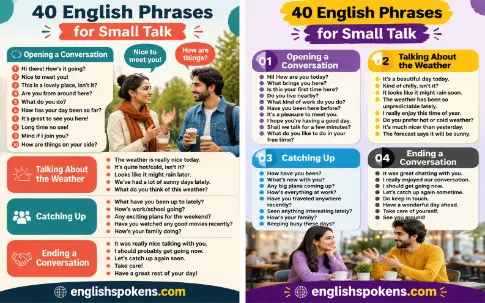
A: What’s up? What are you doing these days?
B: Not much. I’m learning English.
A: That’s interesting. How’s your progress?
B: It’s going well!
Other useful casual expressions include I’m just chilling (میں بس آرام کر رہا ہوں), grab a bite (کچھ کھانے کے لیے جانا), and we should catch up (ہمیں مل کر حال احوال پوچھنا چاہیے). Use them with people you know in informal situations.
Asking Questions and Getting Information
These expressions help you request information, clarify something, and understand what another person is saying.
| English phrase | Simple meaning | Urdu meaning |
|---|---|---|
| 21. What do you mean? | Asking someone to explain. | آپ کا کیا مطلب ہے؟ |
| 22. Could you repeat that? | Asking someone to say something again. | کیا آپ دوبارہ کہہ سکتے ہیں؟ |
| 23. What happened? | Asking about an event. | کیا ہوا؟ |
| 24. Where are you going? | Asking about someone’s destination. | آپ کہاں جا رہے ہیں؟ |
| 25. What time is it? | Asking for the current time. | کیا وقت ہوا ہے؟ |
| 26. Do you know? | Asking whether someone has information. | کیا آپ جانتے ہیں؟ |
| 27. Is everything okay? | Checking whether there is a problem. | کیا سب ٹھیک ہے؟ |
| 28. Can you explain this? | Requesting an explanation. | کیا آپ یہ سمجھا سکتے ہیں؟ |
| 29. What do you think? | Asking for someone’s opinion. | آپ کا کیا خیال ہے؟ |
| 30. How does it work? | Asking how something functions. | یہ کیسے کام کرتا ہے؟ |
A: Could you explain this question?
B: Of course. Which part don’t you understand?
A: I don’t understand the last sentence.
B: Let me explain it again.
Agreeing and Disagreeing
Use these expressions to communicate agreement or disagreement without sounding unnecessarily rude.
| English phrase | Simple meaning | Urdu meaning |
|---|---|---|
| 31. I agree. | I have the same opinion. | میں متفق ہوں۔ |
| 32. Exactly! | That is completely correct. | بالکل! |
| 33. You’re absolutely right. | Your opinion is correct. | آپ بالکل درست ہیں۔ |
| 34. I think so too. | I have the same thought. | میرا بھی یہی خیال ہے۔ |
| 35. I couldn’t agree more. | I completely agree. | میں آپ کی بات سے مکمل اتفاق کرتا ہوں۔ |
| 36. I don’t think so. | I have a different opinion. | میرا ایسا خیال نہیں ہے۔ |
| 37. I see your point. | I understand your argument. | میں آپ کی بات سمجھتا ہوں۔ |
| 38. Not necessarily. | That is not always true. | ضروری نہیں کہ ایسا ہی ہو۔ |
| 39. I beg to differ. | I respectfully disagree. | میں احترام کے ساتھ اختلاف کرنا چاہوں گا۔ |
| 40. That’s a good point. | Your argument is worth considering. | یہ ایک اچھی بات ہے۔ |
A: I think practising English every day is useful.
B: I couldn’t agree more.
A: It also helps improve speaking confidence.
B: Exactly!
Expressing Opinions
These expressions help you share thoughts, explain preferences, and discuss different ideas.
| English phrase | Simple meaning | Urdu meaning |
|---|---|---|
| 41. In my opinion… | Introducing your personal view. | میری رائے میں… |
| 42. I believe that… | Expressing what you believe. | میرا ماننا ہے کہ… |
| 43. As far as I know… | Sharing information you believe is correct. | جہاں تک مجھے معلوم ہے… |
| 44. Personally, I think… | Introducing your personal opinion. | ذاتی طور پر میرا خیال ہے… |
| 45. It depends. | The answer changes according to circumstances. | یہ حالات پر منحصر ہے۔ |
| 46. From my point of view… | Introducing your perspective. | میرے نقطۂ نظر سے… |
| 47. I prefer this one. | Saying you like this option more. | مجھے یہ زیادہ پسند ہے۔ |
| 48. To be honest… | Introducing a sincere opinion. | سچ کہوں تو… |
| 49. I have no objection. | Saying you do not oppose something. | مجھے کوئی اعتراض نہیں۔ |
| 50. That’s a fair point. | Recognizing a reasonable argument. | آپ کی بات میں وزن ہے۔ |
A: Which learning method do you prefer?
B: Personally, I think speaking practice is very useful.
A: Why do you think so?
B: Because it gives me a chance to use what I learn.
Everyday Reactions and Responses
These short expressions help you react naturally and show interest, surprise, or disappointment.
| English phrase | Simple meaning | Urdu meaning |
|---|---|---|
| 51. That’s amazing! | Showing positive surprise. | یہ حیرت انگیز ہے! |
| 52. No way! | Expressing disbelief or surprise. | ایسا نہیں ہو سکتا! |
| 53. That’s great! | Showing happiness about something. | یہ بہت اچھا ہے! |
| 54. What a shame! | Expressing disappointment. | یہ افسوس کی بات ہے! |
| 55. Never mind. | Saying something is not important now. | کوئی بات نہیں۔ |
| 56. It doesn’t matter. | Saying something is not important. | اس سے کوئی فرق نہیں پڑتا۔ |
| 57. That’s too bad. | Expressing sympathy about something unfortunate. | یہ بہت افسوس کی بات ہے۔ |
| 58. Good for you! | Showing approval or happiness for someone. | یہ تو بہت اچھی بات ہے! |
| 59. I had no idea. | Saying you did not know something. | مجھے بالکل معلوم نہیں تھا۔ |
| 60. You never know. | Saying something is uncertain. | کچھ بھی ہو سکتا ہے۔ |
A: I passed my English examination!
B: That’s amazing! Congratulations!
A: Thank you. I worked hard for it.
B: Good for you!
Polite English Expressions
Polite expressions help you communicate respectfully with friends, strangers, teachers, colleagues, and customers.
| English phrase | Simple meaning | Urdu meaning |
|---|---|---|
| 61. Please. | A polite word used when requesting something. | براہِ کرم۔ |
| 62. Thank you so much. | Expressing sincere gratitude. | آپ کا بہت شکریہ۔ |
| 63. You’re welcome. | Responding to someone’s thanks. | آپ کا خیرمقدم ہے۔ |
| 64. Excuse me. | Politely getting someone’s attention. | معاف کیجیے۔ |
| 65. I’m sorry. | Apologising or expressing regret. | مجھے افسوس ہے / معذرت۔ |
| 66. That’s very kind of you. | Appreciating someone’s kindness. | یہ آپ کی بہت مہربانی ہے۔ |
| 67. Would you mind…? | A polite way to make a request or ask permission. | کیا آپ کو اعتراض ہوگا؟ |
| 68. After you. | Politely allowing someone to go first. | پہلے آپ۔ |
| 69. I appreciate it. | Expressing gratitude. | میں آپ کا شکر گزار ہوں۔ |
| 70. May I come in? | Politely asking permission to enter. | کیا میں اندر آ سکتا ہوں؟ |
Ending Conversations Naturally
Use these expressions when finishing a conversation, leaving a place, or saying goodbye.
| English phrase | Simple meaning | Urdu meaning |
|---|---|---|
| 71. See you later. | Saying you expect to meet again. | پھر ملاقات ہوگی۔ |
| 72. Take care. | Wishing someone well. | اپنا خیال رکھیں۔ |
| 73. I’ve got to go. | Saying you need to leave. | مجھے جانا ہے۔ |
| 74. Talk to you soon. | Saying you will speak again soon. | جلد بات ہوگی۔ |
| 75. Have a nice day. | Wishing someone a pleasant day. | آپ کا دن اچھا گزرے۔ |
| 76. It was nice talking to you. | Expressing pleasure after a conversation. | آپ سے بات کرکے اچھا لگا۔ |
| 77. Catch you later. | An informal way to say goodbye. | پھر ملتے ہیں۔ |
| 78. See you tomorrow. | Saying you will meet the next day. | کل ملاقات ہوگی۔ |
| 79. Goodbye for now. | Ending the conversation for the present. | فی الحال خدا حافظ۔ |
| 80. I’d better be going. | Politely saying it is time to leave. | اب مجھے چلنا چاہیے۔ |
More Useful Expressions for Everyday Conversations
These additional phrases are useful for managing everyday situations and keeping conversations moving.
| No. | English phrase | Urdu meaning |
|---|---|---|
| 81 | I’m on my way. | میں راستے میں ہوں۔ |
| 82 | Just a moment. | ذرا ٹھہریے۔ |
| 83 | Give me a minute. | مجھے ایک منٹ دیں۔ |
| 84 | I’ll let you know. | میں آپ کو بتا دوں گا۔ |
| 85 | It slipped my mind. | یہ میرے ذہن سے نکل گیا۔ |
| 86 | No worries. | کوئی بات نہیں۔ |
| 87 | That makes sense. | یہ بات سمجھ میں آتی ہے۔ |
| 88 | I don’t mind. | مجھے کوئی اعتراض نہیں۔ |
| 89 | It’s up to you. | یہ آپ پر منحصر ہے۔ |
| 90 | Sounds good to me. | مجھے یہ اچھا لگتا ہے۔ |
| 91 | I’m not sure yet. | مجھے ابھی یقین نہیں ہے۔ |
| 92 | Let me check. | مجھے چیک کرنے دیں۔ |
| 93 | Keep me updated. | مجھے باخبر رکھیں۔ |
| 94 | I have no idea. | مجھے کوئی اندازہ نہیں۔ |
| 95 | That’s not what I meant. | میرا یہ مطلب نہیں تھا۔ |
| 96 | Take your time. | آرام سے وقت لیں۔ |
| 97 | It happens. | ایسا ہو جاتا ہے۔ |
| 98 | I’m looking forward to it. | مجھے اس کا بے صبری سے انتظار ہے۔ |
| 99 | I hope so. | مجھے امید ہے۔ |
| 100 | See you around. | پھر کہیں ملاقات ہوگی۔ |
| 101 | What do you have in mind? | آپ کے ذہن میں کیا ہے؟ |
| 102 | Let me get back to you. | میں آپ کو بعد میں جواب دوں گا۔ |
| 103 | I didn’t catch that. | میں آپ کی بات سمجھ نہیں سکا۔ |
| 104 | Could you speak more slowly? | کیا آپ تھوڑا آہستہ بول سکتے ہیں؟ |
| 105 | That’s not a problem. | یہ کوئی مسئلہ نہیں ہے۔ |
Daily English Phrases for Everyday Situations
Knowing phrases by situation helps you choose an expression that fits the moment. Practise the phrases you are most likely to use at home, school, work, while shopping, or when travelling. This section connects daily English phrases with real-life settings, making it easier to choose suitable language instead of memorising expressions without context.
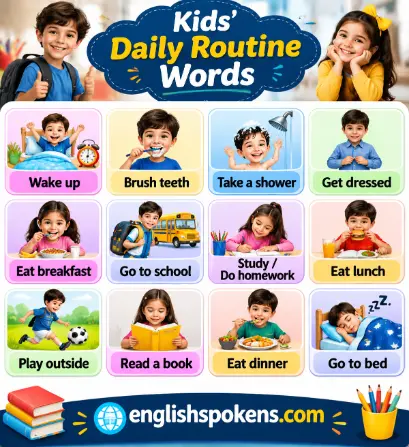
Morning and Evening Routine
| English phrase | Urdu meaning |
|---|---|
| I usually wake up early. | میں عام طور پر جلدی اٹھتا ہوں۔ |
| I overslept today. | آج میری آنکھ دیر سے کھلی۔ |
| I’m getting ready. | میں تیار ہو رہا ہوں۔ |
| Have you had breakfast? | کیا آپ نے ناشتہ کر لیا ہے؟ |
| I’m running late. | مجھے دیر ہو رہی ہے۔ |
| I need to leave now. | مجھے اب نکلنا ہے۔ |
| I’m heading home. | میں گھر جا رہا ہوں۔ |
| How was your day? | آپ کا دن کیسا گزرا؟ |
| Dinner is ready. | رات کا کھانا تیار ہے۔ |
| I’m going to bed. | میں سونے جا رہا ہوں۔ |
Home and Family Conversations
| English phrase | Urdu meaning |
|---|---|
| Please tidy your room. | براہِ کرم اپنا کمرہ صاف کریں۔ |
| Turn off the lights. | لائٹس بند کر دیں۔ |
| I’ll take care of it. | میں اسے سنبھال لوں گا۔ |
| Where did you put the keys? | آپ نے چابیاں کہاں رکھی ہیں؟ |
| Can you set the table? | کیا آپ کھانے کی میز لگا سکتے ہیں؟ |
| I’ll be back in a minute. | میں ایک منٹ میں واپس آؤں گا۔ |
| Let’s eat together. | چلو مل کر کھانا کھاتے ہیں۔ |
| Please lower your voice. | براہِ کرم اپنی آواز دھیمی رکھیں۔ |
| Who is at the door? | دروازے پر کون ہے؟ |
| Make yourself comfortable. | آرام سے بیٹھیں۔ |
A: Where are the keys?
B: They’re on the table.
A: Could you bring them, please?
B: Sure. I’ll get them.
Shopping and Paying Bills
| English phrase | Urdu meaning |
|---|---|
| How much is this? | یہ کتنے کا ہے؟ |
| Do you have this in another size? | کیا یہ کسی دوسرے سائز میں موجود ہے؟ |
| Can I try it on? | کیا میں اسے پہن کر دیکھ سکتا ہوں؟ |
| I’m just looking, thanks. | میں صرف دیکھ رہا ہوں، شکریہ۔ |
| Is there a discount? | کیا اس پر کوئی رعایت ہے؟ |
| Could I have a receipt? | کیا مجھے رسید مل سکتی ہے؟ |
| Can I pay by card? | کیا میں کارڈ سے ادائیگی کر سکتا ہوں؟ |
| I’d like to return this. | میں یہ واپس کرنا چاہتا ہوں۔ |
| Do you have anything cheaper? | کیا آپ کے پاس اس سے سستی چیز ہے؟ |
| That’s too expensive for me. | یہ میرے لیے بہت مہنگا ہے۔ |
Customer: Excuse me, how much is this shirt?
Shopkeeper: It’s 2,500 rupees.
Customer: Is there a discount?
Shopkeeper: Yes, I can offer you 10% off.
Restaurants and Ordering Food
| English phrase | Urdu meaning |
|---|---|
| A table for two, please. | دو افراد کے لیے ایک میز چاہیے۔ |
| Could I see the menu? | کیا میں مینیو دیکھ سکتا ہوں؟ |
| What do you recommend? | آپ کیا تجویز کریں گے؟ |
| I’d like to order now. | میں اب آرڈر دینا چاہتا ہوں۔ |
| Could we have some water? | کیا ہمیں کچھ پانی مل سکتا ہے؟ |
| Is this dish spicy? | کیا یہ کھانا مصالحے دار ہے؟ |
| Can I have this without onions? | کیا یہ پیاز کے بغیر مل سکتا ہے؟ |
| Could I get this to go? | کیا یہ کھانا پیک ہو سکتا ہے؟ |
| Could we have the bill, please? | کیا ہمیں بل مل سکتا ہے؟ |
| The food was delicious. | کھانا بہت مزیدار تھا۔ |
“Could I get this to go?” is especially common in American English. In other settings, you can also ask, “Could I have this takeaway, please?”
Travel and Asking for Directions
| English phrase | Urdu meaning |
|---|---|
| Where is the nearest bus stop? | قریب ترین بس اسٹاپ کہاں ہے؟ |
| How do I get to the station? | میں اسٹیشن کیسے پہنچ سکتا ہوں؟ |
| Does this bus go to the city centre? | کیا یہ بس شہر کے مرکز تک جاتی ہے؟ |
| How much is the fare? | کرایہ کتنا ہے؟ |
| Where can I get a taxi? | مجھے ٹیکسی کہاں سے مل سکتی ہے؟ |
| Please let me know when we arrive. | جب ہم پہنچیں تو مجھے بتا دیجیے گا۔ |
| I think I’m lost. | میرا خیال ہے کہ میں راستہ بھول گیا ہوں۔ |
| How far is it from here? | یہاں سے یہ کتنی دور ہے؟ |
| Is there a shortcut? | کیا کوئی مختصر راستہ ہے؟ |
| Could you show me on the map? | کیا آپ مجھے نقشے پر دکھا سکتے ہیں؟ |
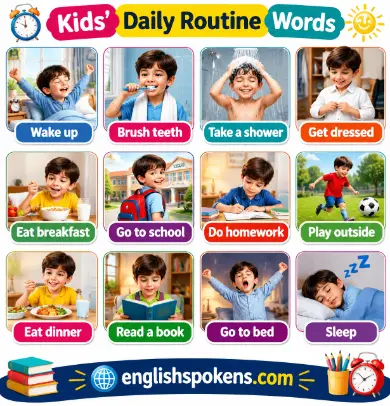
School and Classroom Conversations
| English phrase | Urdu meaning |
|---|---|
| May I ask a question? | کیا میں ایک سوال پوچھ سکتا ہوں؟ |
| Could you explain this again? | کیا آپ اسے دوبارہ سمجھا سکتے ہیں؟ |
| I haven’t finished yet. | میں نے ابھی مکمل نہیں کیا۔ |
| When is the assignment due? | اسائنمنٹ جمع کرانے کی آخری تاریخ کب ہے؟ |
| Could you check my answer? | کیا آپ میرا جواب چیک کر سکتے ہیں؟ |
| May I borrow a pen? | کیا میں ایک قلم لے سکتا ہوں؟ |
| Please open your books. | براہِ کرم اپنی کتابیں کھولیں۔ |
| Work in pairs. | دو دو کے گروپ میں کام کریں۔ |
| I didn’t understand the lesson. | مجھے سبق سمجھ نہیں آیا۔ |
| Can you repeat the question? | کیا آپ سوال دوبارہ دہرا سکتے ہیں؟ |
Workplace and Office Conversations
| English phrase | Urdu meaning |
|---|---|
| I’m working on it. | میں اس پر کام کر رہا ہوں۔ |
| Could we discuss this? | کیا ہم اس پر بات کر سکتے ہیں؟ |
| I’ll send it by email. | میں اسے ای میل کے ذریعے بھیج دوں گا۔ |
| Let’s schedule a meeting. | آئیے ایک میٹنگ طے کرتے ہیں۔ |
| Could you clarify the deadline? | کیا آپ آخری تاریخ واضح کر سکتے ہیں؟ |
| I’ll keep you posted. | میں آپ کو باخبر رکھوں گا۔ |
| I’ve completed the task. | میں نے کام مکمل کر لیا ہے۔ |
| Let’s get started. | آئیے شروع کرتے ہیں۔ |
| I’ll get back to you shortly. | میں جلد آپ کو جواب دوں گا۔ |
| Could you share the report? | کیا آپ رپورٹ شیئر کر سکتے ہیں؟ |
Phone Calls, Chatting and Text Messages
| English phrase | Urdu meaning |
|---|---|
| Can you hear me? | کیا آپ میری آواز سن سکتے ہیں؟ |
| The line is breaking up. | آواز بار بار کٹ رہی ہے۔ |
| I’ll call you back. | میں آپ کو دوبارہ فون کروں گا۔ |
| Sorry, I missed your call. | معذرت، آپ کی کال رہ گئی تھی۔ |
| Could you send me the details? | کیا آپ مجھے تفصیلات بھیج سکتے ہیں؟ |
| I’m in a meeting right now. | میں اس وقت میٹنگ میں ہوں۔ |
| Text me when you arrive. | پہنچ کر مجھے میسج کرنا۔ |
| I’ll message you later. | میں آپ کو بعد میں پیغام بھیجوں گا۔ |
| Are you available to talk? | کیا آپ بات کرنے کے لیے دستیاب ہیں؟ |
| I’ll share my location. | میں اپنی لوکیشن شیئر کر دوں گا۔ |
Useful English Phrases for Asking for Help and Making Requests
The way you make a request can change how polite, friendly, or formal you sound. These expressions are useful with friends, colleagues, teachers, and people you do not know well. Practising daily English phrases for requests can help you sound clear and courteous when you need information, assistance, or a small favour.
| English phrase | Urdu meaning | When to use it |
|---|---|---|
| Could you give me a hand? | کیا آپ میری مدد کر سکتے ہیں؟ | Asking for assistance. |
| Would you mind helping me? | کیا آپ میری مدد کر سکتے ہیں؟ | Making a polite request. |
| Could you please explain this? | کیا آپ براہِ کرم یہ سمجھا سکتے ہیں؟ | Asking for an explanation. |
| Can I ask you a favour? | کیا میں آپ سے ایک کام کہہ سکتا ہوں؟ | Introducing a favour request. |
| Could you show me how to do this? | کیا آپ مجھے یہ کرنا سکھا سکتے ہیں؟ | Asking for guidance. |
| Would it be possible to reschedule? | کیا وقت تبدیل کرنا ممکن ہوگا؟ | Making a formal request. |
| Do you mind if I sit here? | کیا آپ کو اعتراض ہے اگر میں یہاں بیٹھوں؟ | Asking permission. |
| Could I borrow your phone? | کیا میں آپ کا فون لے سکتا ہوں؟ | Requesting to use something. |
| Could you wait a moment? | کیا آپ ایک لمحہ انتظار کر سکتے ہیں؟ | Asking someone to wait. |
| I would appreciate your help. | میں آپ کی مدد کا شکر گزار ہوں گا۔ | Polite professional request. |
A: Could you give me a hand with this box?
B: Sure. Where should I put it?
A: Please put it near the door.
B: No problem!
English Expressions for Feelings and Emotions
Being able to express your feelings helps you explain your experiences and understand other people’s emotions. Add these expressions to your daily English phrases practice when you want to describe how you feel, respond with empathy, or share good news.
| English expression | Urdu meaning |
|---|---|
| I’m feeling great today. | آج میں بہت اچھا محسوس کر رہا ہوں۔ |
| I’m a little nervous. | میں تھوڑا گھبرایا ہوا ہوں۔ |
| I’m really looking forward to it. | مجھے اس کا بے صبری سے انتظار ہے۔ |
| I’m disappointed. | میں مایوس ہوں۔ |
| I’m relieved. | مجھے سکون محسوس ہو رہا ہے۔ |
| I’m worried about you. | مجھے آپ کی فکر ہے۔ |
| I’m proud of you. | مجھے آپ پر فخر ہے۔ |
| I feel left out. | مجھے لگتا ہے کہ مجھے نظر انداز کیا جا رہا ہے۔ |
| I’m exhausted. | میں بہت زیادہ تھک گیا ہوں۔ |
| That made my day. | اس بات نے میرا دن بنا دیا۔ |
| I’m in a good mood. | میرا موڈ اچھا ہے۔ |
| I feel much better now. | اب میں بہت بہتر محسوس کر رہا ہوں۔ |
A: You look happy today. What’s the reason?
B: I passed my driving test!
A: That’s wonderful. You must be relieved.
B: Yes, I was really nervous before the test.
English Phrases for Apologising and Handling Problems
Misunderstandings and mistakes can happen in any conversation. These expressions help you apologize, explain a problem, and work towards a solution. These daily English phrases are especially useful when you need to take responsibility, clarify a misunderstanding, or respond calmly to a problem.
| English phrase | Urdu meaning |
|---|---|
| I’m sorry for being late. | دیر سے آنے پر معذرت۔ |
| I didn’t mean to upset you. | میرا مقصد آپ کو ناراض کرنا نہیں تھا۔ |
| It was my mistake. | یہ میری غلطی تھی۔ |
| Please accept my apology. | براہِ کرم میری معذرت قبول کریں۔ |
| Thanks for pointing that out. | اس بات کی نشاندہی کرنے کا شکریہ۔ |
| Let’s see how we can fix it. | آئیے دیکھتے ہیں کہ اسے کیسے ٹھیک کیا جا سکتا ہے۔ |
| I understand your concern. | میں آپ کی تشویش سمجھتا ہوں۔ |
| I’ll make sure it doesn’t happen again. | میں یقین دہانی کراؤں گا کہ ایسا دوبارہ نہ ہو۔ |
| Could we start over? | کیا ہم دوبارہ شروع کر سکتے ہیں؟ |
| I owe you an apology. | مجھے آپ سے معذرت کرنی چاہیے۔ |
A: You sent me the wrong document.
B: I’m sorry. It was my mistake.
A: Could you send the correct one?
B: Of course. I’ll send it right away.
Common English Idioms and Expressions for Daily Use
Idioms are expressions whose meanings cannot always be understood by translating each word separately. They are common in informal conversations, stories, and everyday communication. Learn their meaning and context before using them. Idioms are one part of everyday English phrases, but they should be learned with their meaning, tone, and the situations in which native speakers commonly use them.
Common Idioms for Everyday Conversations
| Idiom | Meaning | Urdu meaning |
|---|---|---|
| Break the ice | Make people feel comfortable at the beginning of a conversation. | جھجک ختم کرنا |
| A piece of cake | Something very easy. | بہت آسان کام |
| Under the weather | Feeling slightly ill. | طبیعت خراب ہونا |
| Once in a blue moon | Very rarely. | بہت کم |
| Hit the nail on the head | Describe something exactly right. | بالکل درست بات کہنا |
| Cost an arm and a leg | Be extremely expensive. | بہت مہنگا ہونا |
| Call it a day | Stop working for the day. | آج کا کام ختم کرنا |
| Get the ball rolling | Start an activity or process. | کام شروع کرنا |
| On the same page | Have the same understanding. | ایک ہی بات پر متفق ہونا |
| A blessing in disguise | Something that seems bad but later proves beneficial. | بظاہر بری مگر حقیقت میں فائدہ مند چیز |
Examples: “The test was a piece of cake.” “I’m feeling under the weather today.” “Let’s call it a day and continue tomorrow.”
Daily Use Idioms with Meanings and Examples
| Idiom | Meaning | Example sentence |
|---|---|---|
| Better late than never | Doing something late is better than not doing it. | You finally started learning English. Better late than never! |
| Keep an eye on | Watch something carefully. | Please keep an eye on my bag. |
| Pull someone’s leg | Joke with someone. | Don’t worry, I’m just pulling your leg. |
| The last straw | The final problem that makes a situation unbearable. | His rude behaviour was the last straw. |
| Burn the midnight oil | Work or study late at night. | She burned the midnight oil before her examination. |
| Back to the drawing board | Start planning again after failure. | Our first plan didn’t work, so it’s back to the drawing board. |
| Speak of the devil | Said when someone appears just after being mentioned. | Speak of the devil! We were just talking about you. |
| Bite the bullet | Face something difficult or unpleasant. | I decided to bite the bullet and make the difficult call. |
| Go the extra mile | Make more effort than expected. | She always goes the extra mile for her students. |
| Hit the sack | Go to bed. | I’m exhausted. It’s time to hit the sack. |
Useful Idioms for Natural English Speaking
| Idiom | Meaning | Example sentence |
|---|---|---|
| I’m all ears | I’m ready to listen carefully. | Tell me your idea. I’m all ears. |
| Play it by ear | Decide what to do as a situation develops. | We haven’t made a plan. Let’s play it by ear. |
| Running on fumes | Having almost no energy left. | I’m running on fumes after working all day. |
| A win-win situation | A situation that benefits everyone involved. | This agreement is a win-win situation for both companies. |
| Think outside the box | Think creatively and differently. | We need to think outside the box to solve this problem. |
| Elephant in the room | An obvious issue that nobody wants to discuss. | Let’s talk about the elephant in the room. |
Do not use an idiom simply because it sounds impressive. A simple expression is often better in formal communication.
30 Useful English Phrasal Verbs with Get
The word get combines with particles and prepositions to form expressions with different meanings. Some entries below are phrasal verbs; others are phrasal-prepositional verbs.
| No. | Expression | Meaning | Example |
|---|---|---|---|
| 1 | Get up | Rise from bed. | I get up at seven every morning. |
| 2 | Get out | Leave a place. | Let’s get out of here. |
| 3 | Get in | Enter a place or vehicle. | Get in the car. |
| 4 | Get on | Board a bus or train. | Get on the bus at the next stop. |
| 5 | Get off | Leave a bus or train. | Get off at the next stop. |
| 6 | Get back | Return. | I’ll get back home soon. |
| 7 | Get away | Escape or take a break. | We need to get away for a weekend. |
| 8 | Get along with | Have a good relationship. | I get along with my colleagues. |
| 9 | Get over | Recover from something. | She got over her illness. |
| 10 | Get through | Complete or survive something difficult. | I got through the examination. |
| 11 | Get by | Manage with available resources. | We can get by with this budget. |
| 12 | Get ahead | Make progress. | She works hard to get ahead. |
| 13 | Get around | Move from place to place. | It’s easy to get around the city. |
| 14 | Get across | Communicate an idea successfully. | I couldn’t get my message across. |
| 15 | Get down to | Start doing something seriously. | Let’s get down to work. |
| 16 | Get into | Become interested in something. | I’ve recently got into photography. |
| 17 | Get out of | Avoid an obligation or leave something. | He tried to get out of the meeting. |
| 18 | Get rid of | Remove something unwanted. | I need to get rid of these old clothes. |
| 19 | Get together | Meet socially. | Let’s get together this weekend. |
| 20 | Get on with | Continue doing something. | Get on with your work. |
| 21 | Get back to | Reply to someone later. | I’ll get back to you tomorrow. |
| 22 | Get around to | Finally find time to do something. | I finally got around to cleaning my room. |
| 23 | Get away with | Avoid punishment for something wrong. | He got away with a small mistake. |
| 24 | Get in touch with | Contact someone. | I’ll get in touch with you. |
| 25 | Get hold of | Contact or obtain something. | I couldn’t get hold of him. |
| 26 | Get through to | Reach someone or make them understand. | I finally got through to her. |
| 27 | Get carried away | Become too excited or involved. | Don’t get carried away. |
| 28 | Get worked up | Become upset or anxious. | Don’t get worked up over it. |
| 29 | Get behind | Fall behind with work or a schedule. | I got behind with my assignments. |
| 30 | Get something over with | Finish something unpleasant. | Let’s get this meeting over with. |
Try describing your routine with these expressions: “I get up at seven. I get dressed, get breakfast ready, and get going. At work, I get started on my tasks and try to get through my emails. When I get back home, I get comfortable and get dinner ready.”
Advanced English Phrases for Everyday Conversation
Once you are comfortable with basic expressions, learn more nuanced phrases for explaining opinions, discussing problems, and communicating precisely. Some are more suitable for professional or thoughtful conversations than casual small talk. Include a few of these advanced daily English phrases in your speaking practice once you are comfortable with simpler expressions and their everyday uses.
| English phrase | Simple meaning | Urdu meaning |
|---|---|---|
| I see where you’re coming from. | I understand your perspective. | میں آپ کا نقطۂ نظر سمجھتا ہوں۔ |
| That’s easier said than done. | Doing it is harder than talking about it. | کہنا آسان ہے مگر کرنا مشکل۔ |
| I’m on the fence. | I haven’t decided yet. | میں ابھی فیصلہ نہیں کر پایا۔ |
| It slipped my mind. | I forgot about it. | یہ میرے ذہن سے نکل گیا۔ |
| Let’s not jump to conclusions. | Let’s not decide before knowing all the facts. | آئیے مکمل معلومات کے بغیر نتیجہ نہ نکالیں۔ |
| I wouldn’t go that far. | I don’t completely agree with that statement. | میں اس حد تک اتفاق نہیں کروں گا۔ |
| To put it simply… | To explain something in simple words. | آسان الفاظ میں… |
| As far as I’m concerned… | Introducing your personal position. | جہاں تک میرا تعلق ہے… |
| That rings a bell. | It sounds familiar. | یہ کچھ جانا پہچانا لگتا ہے۔ |
| I couldn’t have put it better. | That is an excellent way to express the idea. | میں اس بات کو اس سے بہتر بیان نہیں کر سکتا تھا۔ |
| It’s worth considering. | It deserves some thought. | اس پر غور کرنا چاہیے۔ |
| I take your point. | I understand your argument. | میں آپ کی بات سمجھتا ہوں۔ |
| For the time being… | For now. | فی الحال… |
| I’m not entirely convinced. | I still have some doubts. | مجھے ابھی مکمل یقین نہیں ہے۔ |
| Let’s get straight to the point. | Let’s discuss the main issue directly. | آئیے سیدھی اصل بات پر آتے ہیں۔ |
Other expressions from natural workplace conversations include Let’s touch base later (بعد میں مختصر بات کرتے ہیں), I’ll circle back on this (میں اس موضوع پر دوبارہ بات کروں گا), and I’m swamped right now (میں اس وقت بہت زیادہ کام میں مصروف ہوں). Use business expressions only when they fit the situation.
A: I think we should change our study schedule.
B: I see where you’re coming from, but that’s easier said than done.
A: Why do you think so?
B: We already have several commitments.
A: That’s a fair point. Let’s discuss another option.
Useful English Vocabulary Words for Daily Conversation
Learning individual words alongside phrases helps you understand conversations and create your own sentences. Start with words that are useful in daily routines, work, plans, and common situations. Combining useful words with daily English phrases helps you move from recognising vocabulary to expressing complete thoughts in conversation.
Basic English Words for Daily Use
| Word | Urdu meaning |
|---|---|
| Ready | تیار |
| Enough | کافی |
| Nearby | قریب |
| Usually | عام طور پر |
| Comfortable | آرام دہ |
Common English Words with Meanings
| Word | Urdu meaning |
|---|---|
| Appointment | ملاقات کا طے شدہ وقت |
| Available | دستیاب |
| Convenient | آسان اور مناسب |
| Crowded | بھیڑ بھاڑ والا |
| Exhausted | بہت زیادہ تھکا ہوا |
| Familiar | جانا پہچانا |
| Improve | بہتر بنانا |
| Prefer | ترجیح دینا |
| Probably | غالباً |
| Recently | حال ہی میں |
Useful Words with Example Sentences
| Word | Example sentence | Urdu meaning |
|---|---|---|
| Schedule | I have a busy schedule today. | آج میرا شیڈول مصروف ہے۔ |
| Solution | We need to find a solution. | ہمیں ایک حل تلاش کرنا ہے۔ |
| Urgent | This is an urgent matter. | یہ ایک فوری معاملہ ہے۔ |
| Reliable | He is a reliable person. | وہ ایک قابلِ اعتماد شخص ہے۔ |
| Opportunity | This is a great opportunity. | یہ ایک بہترین موقع ہے۔ |
| Actually | Actually, I agree with you. | دراصل، میں آپ سے متفق ہوں۔ |
| Arrange | I’ll arrange a meeting. | میں ایک میٹنگ کا انتظام کروں گا۔ |
| Avoid | Try to avoid unnecessary arguments. | غیر ضروری بحث سے بچنے کی کوشش کریں۔ |
| Borrow | Can I borrow your pen? | کیا میں آپ کا قلم لے سکتا ہوں؟ |
| Decide | I need to decide today. | مجھے آج فیصلہ کرنا ہے۔ |
| Expect | I expect him to arrive soon. | مجھے امید ہے کہ وہ جلد پہنچے گا۔ |
| Explain | Please explain this again. | براہِ کرم یہ دوبارہ سمجھائیں۔ |
| Handle | I can handle this problem. | میں اس مسئلے کو سنبھال سکتا ہوں۔ |
| Mention | She mentioned your name. | اس نے آپ کا نام لیا۔ |
| Notice | Did you notice the difference? | کیا آپ نے فرق محسوس کیا؟ |
| Prepare | I’m preparing dinner. | میں رات کا کھانا تیار کر رہا ہوں۔ |
| Remind | Please remind me tomorrow. | براہِ کرم مجھے کل یاد دلائیں۔ |
| Suggest | I suggest taking a break. | میرا مشورہ ہے کہ وقفہ لے لیں۔ |
| Suitable | This time is suitable for me. | یہ وقت میرے لیے مناسب ہے۔ |
| Waste | Don’t waste your time. | اپنا وقت ضائع نہ کریں۔ |
Formal vs Informal English Phrases
English expressions change depending on whom you are speaking to and the situation. You may use relaxed language with friends but more polite expressions with a teacher, manager, customer, or someone you do not know well.
| Informal English | Formal or more polite English |
|---|---|
| Hi! | Good morning. |
| What’s up? | How are you doing? |
| Can you help me? | Could you please assist me? |
| Give me a minute. | Could you give me a moment? |
| I want some information. | I would like some information. |
| Sorry about that. | I apologise for that. |
| I don’t get it. | I’m afraid I don’t understand. |
| Send me the file. | Could you please send me the file? |
| See you later. | I look forward to seeing you again. |
| Thanks a lot. | Thank you very much. |
- Informal English: With friends, family, and people you know well.
- Polite English: With strangers, customers, teachers, and colleagues when you want to show respect.
- Formal English: In professional meetings, interviews, and official communication.
Formal English does not always mean using long or complicated words. A short, polite sentence is often more effective.
Natural English vs Textbook English: Common Mistakes
Some expressions are grammatically incorrect, while others may be understood in regional English but sound unusual in wider international conversations. Learning common alternatives can help you communicate more clearly.
| Less natural or incorrect expression | Better alternative | Explanation |
|---|---|---|
| I am agree. | I agree. | Agree is a verb, so it does not need am. |
| I did a mistake. | I made a mistake. | The usual collocation is make a mistake. |
| I am going to my home. | I’m going home. | Home is used without to in this expression. |
| Open the light. | Turn on the light. | Turn on is the usual expression for switching on a light. |
| Close the fan. | Turn off the fan. | Turn off means to stop an electrical device. |
| Today morning. | This morning. | This morning is the usual time expression. |
| Discuss about this. | Discuss this. | Discuss does not need about before its object. |
| One of my friend. | One of my friends. | One of is followed by a plural noun. |
| More better. | Better. | Better already expresses comparison. |
| Return back. | Return / Come back. | Back is unnecessary with return. |
| What’s your good name? | What’s your name? | The second form is more widely natural in international English. |
| Revert me. | Please reply to me. | Reply is clearer in general international English. |
Daily Use English Sentences for Speaking Practice
Phrases help you express ideas, while complete sentences show how to use those expressions in real communication. A phrase is a group of words that may not express a complete thought; a sentence communicates a complete idea. For example, “On my way” is a phrase, while “I’m on my way home” is a complete sentence. The examples in this section build a practical set of 40 everyday English sentences, including short sentences for beginners and sentences with Urdu meanings. To turn daily English phrases into active speaking skills, practise them inside complete sentences and adapt the examples to your own routine.
Simple and Short English Sentences
These sentences are suitable for beginners who want to start speaking English in everyday situations.
- I need some water.
- I’m getting ready.
- Please wait here.
- I’ll call you later.
- I don’t understand.
- Could you help me?
- Where are you going?
- What time does it start?
- I’m on my way.
- Let’s do it now.
Common English Sentences for Everyday Conversations
- I usually wake up early.
- I have to finish this today.
- Could you pass me the salt?
- I’ll take care of it.
- Please keep the door closed.
- I haven’t decided yet.
- That sounds like a good idea.
- I need a little more time.
- I’ll let you know.
- It depends on the situation.
More Useful English Sentences for Everyday Speaking
Use these regular English sentences in daily conversations. They are short, natural, and useful for speaking practice in familiar situations.
| English sentence | Urdu meaning |
|---|---|
| Could you say that again? | کیا آپ یہ دوبارہ کہہ سکتے ہیں؟ |
| I’ll think about it. | میں اس بارے میں سوچوں گا۔ |
| Please give me a minute. | براہِ کرم مجھے ایک منٹ دیں۔ |
| What would you like to eat? | آپ کیا کھانا پسند کریں گے؟ |
| I’m looking for my phone. | میں اپنا فون تلاش کر رہا ہوں۔ |
| Let me check the details. | مجھے تفصیلات دیکھنے دیں۔ |
| We can talk about it later. | ہم اس بارے میں بعد میں بات کر سکتے ہیں۔ |
| Please let me know in advance. | براہِ کرم مجھے پہلے سے بتا دیں۔ |
| I’m glad to hear that. | یہ سن کر مجھے خوشی ہوئی۔ |
| Could you speak a little more slowly? | کیا آپ ذرا آہستہ بول سکتے ہیں؟ |
Daily English Sentences with Urdu Meanings
| English sentence | Urdu meaning |
|---|---|
| What are you doing? | آپ کیا کر رہے ہیں؟ |
| Where have you been? | آپ کہاں تھے؟ |
| I’m feeling tired. | میں تھکا ہوا محسوس کر رہا ہوں۔ |
| Please come inside. | براہِ کرم اندر آ جائیں۔ |
| Don’t worry about it. | اس کی فکر نہ کریں۔ |
| I’ll see you tomorrow. | کل آپ سے ملاقات ہوگی۔ |
| Can you hear me clearly? | کیا آپ مجھے صاف سن سکتے ہیں؟ |
| I need your advice. | مجھے آپ کے مشورے کی ضرورت ہے۔ |
| Let me finish my work. | مجھے اپنا کام مکمل کرنے دیں۔ |
| Everything will be fine. | سب کچھ ٹھیک ہو جائے گا۔ |
Practice: Complete the sentences
Choose a suitable word or expression for each blank. Try answering before opening the answer key.
- I’m ______ my way to the office.
- Could you ______ that again?
- It ______ on the situation.
- Let’s ______ down to work.
- I didn’t ______ your question.
- I’ll get ______ to you tomorrow.
- Don’t get ______ up over a small mistake.
- Please keep me ______.
Show suggested answers
- on
- repeat
- depends
- get
- catch
- back
- worked
- updated
Practice: Translate into English
Translate each Urdu sentence into natural English. Say your answer aloud before checking.
- میں ابھی واپس آتا ہوں۔
- آپ کا کیا خیال ہے؟
- مجھے تھوڑا وقت دیں۔
- میں راستے میں ہوں۔
- اس کی فکر نہ کریں۔
- کیا آپ میری مدد کر سکتے ہیں؟
- مجھے ابھی یقین نہیں ہے۔
- میں آپ کو بعد میں بتاؤں گا۔
Show suggested translations
- I’ll be right back.
- What do you think?
- Give me a little time.
- I’m on my way.
- Don’t worry about it.
- Could you help me?
- I’m not sure yet.
- I’ll let you know later.
Daily English Conversation Practice with Dialogues
Reading individual phrases is a useful starting point, but conversations show how people use expressions together. Practise both roles in each dialogue. Then change a few details and repeat it without reading. The dialogues below put daily English phrases into context and show how one speaker’s expression can lead naturally to another person’s response.
Dialogue 1: Talking to a Family Member
A: Have you had breakfast?
B: Not yet. I’m getting ready.
A: What time are you leaving?
B: In about ten minutes.
A: Don’t forget your keys.
B: Thanks for reminding me!
Dialogue 2: At a Shop
Customer: Excuse me, how much is this bag?
Shopkeeper: It’s 3,000 rupees.
Customer: Is there any discount?
Shopkeeper: I can offer you 10% off.
Customer: That sounds good. I’ll take it.
Shopkeeper: Certainly. Would you like a shopping bag?
Dialogue 3: Talking to a Friend
A: Hey! How’s it going?
B: Pretty good. How about you?
A: I’m doing well. What are you doing this weekend?
B: I’m not sure yet. Do you have any plans?
A: We could go out for lunch.
B: That sounds great!
Dialogue 4: At the Office
A: Have you finished the presentation?
B: Not yet. I’m working on the final slides.
A: Could you send me the draft?
B: Sure. I’ll email it to you shortly.
A: Thanks. Let me know if you need any help.
B: I appreciate it.
Speaking challenge: Create your own conversation
Choose five expressions from this guide and use them in a short conversation. Include a greeting, a question, a response, and a natural ending. Practise both roles, then try again without looking at the page.
How to Learn and Remember English Phrases Quickly
Reading a long list once is not enough to make expressions part of your active speaking vocabulary. You need to recall them, practise them in context, and use them in situations where they make sense. A simple way to remember daily English phrases is to choose a small group, review the meanings, say each expression aloud, and use it in a new sentence that day.
- Choose three to five useful expressions. Start with phrases you are likely to use at home, at work, or with friends. A small set gives you time to understand each phrase properly.
- Understand the context. Learn whether an expression is formal, informal, polite, or suitable for a particular situation. For example, “I’m all ears” is informal and means you are ready to listen carefully.
- Listen and repeat aloud. Pay attention to pronunciation, word stress, and natural pauses. Repeat the phrase at a comfortable speed rather than rushing.
- Create a personal example. For “I’m running late,” make a sentence such as “I’m running late because I missed the bus.” Personal examples help connect language with real situations.
- Use active recall. Hide the English phrase and try to remember it from the Urdu meaning. Then reverse the activity by reading the English phrase and recalling its meaning.
- Review regularly. Revisit expressions the next day, a few days later, and again at the end of the week. Spend more time on phrases you keep forgetting.
- Use phrases in a conversation. Practise with a friend, teacher, language partner, or by speaking both sides of a short dialogue aloud.
Consistency and correct usage matter more than memorizing a large number of expressions at once. Reading helps you recognize phrases; speaking practice helps you learn to produce them.
Daily English Phrases PDF with Meanings
A PDF copy can help you revise expressions offline, highlight useful phrases, and keep notes about your own examples. This webpage does not currently provide a separate downloadable PDF file, but you can save a copy of the guide from your browser. Use the PDF download option near the top of this page to keep these daily English phrases available for offline revision and regular speaking practice.
- Open the browser menu on your phone or computer.
- Select Print or Share → Print, depending on your device.
- Choose Save as PDF as the destination.
- Select the pages you want to keep and save the file.
For effective revision, keep the English phrase, its meaning, one example sentence, and a note about the situation where you can use it. Practise a small group each day instead of only reading the list.
Frequently Asked Questions
What are the most useful daily English phrases?
Useful everyday expressions include “How are you?”, “What’s going on?”, “Could you help me?”, “I’ll be right back”, “I don’t understand”, “That sounds good”, “No worries”, “Let me think about it”, “I’ll let you know”, and “Take care”. They help with greetings, requests, questions, and common responses.
What are 10 common English phrases?
Ten common phrases are “Good morning”, “How’s it going?”, “What’s up?”, “Thank you so much”, “You’re welcome”, “Excuse me”, “No problem”, “See you later”, “Take care”, and “Have a nice day”.
What are 100 common English phrases?
One hundred common phrases can be organized into greetings, small talk, questions, polite expressions, opinions, reactions, requests, and conversation endings. Learning them by situation makes their meanings and uses easier to remember.
What are some everyday English phrases?
Examples include “I’m on my way”, “Just a moment”, “What’s happening?”, “I’ll call you back”, “It doesn’t matter”, and “Take your time”. Use them with people and in situations where their tone is appropriate.
What are 20 essential English phrases for daily conversation?
Try “How are you?”, “What’s up?”, “Nice to meet you”, “Could you help me?”, “What do you mean?”, “I agree”, “I don’t think so”, “That sounds great”, “Never mind”, “No worries”, “Let me check”, “I’ll be right back”, “Take your time”, “It depends”, “I have no idea”, “I’ll let you know”, “I’m on my way”, “That makes sense”, “See you later”, and “Take care”.
How many English phrases should I learn every day?
Start with three to five expressions daily. Practise their meanings, pronunciation, and use in complete sentences. Increase the number gradually when you feel comfortable using the expressions you have already learned.
What are some simple English phrases for beginners?
Beginners can start with “I am ready”, “Please come in”, “Wait a moment”, “I need help”, “Where are you?”, “I’m feeling good”, “Let’s go”, “Thank you”, “See you soon”, and “I understand”.
How can I improve my daily English conversation?
Practise short conversations based on familiar situations. Learn common expressions, listen to natural conversations, repeat useful sentences, and try answering questions without translating every word from Urdu. Gradually use new expressions in your own conversations.
How can I remember English phrases?
Understand each phrase in context, connect it with a real-life situation, repeat it aloud, and test your memory without looking at the translation. Review expressions regularly and use them in your own sentences.
How can I speak English naturally in everyday life?
Notice how English speakers greet people, make requests, respond to questions, and express opinions. Learn complete expressions rather than isolated words. Practise them in realistic conversations and choose language that suits the situation.
Can I learn English by practising daily phrases?
Daily phrases help build practical speaking vocabulary and familiarity with common conversational expressions. Speaking development also requires listening, pronunciation practice, sentence construction, grammar, and interaction with other speakers.
What are some English phrases for daily use with meanings?
Useful English phrases for daily use include “Just a moment” (wait briefly), “I’m on my way” (I am coming), “That makes sense” (I understand the reason), “Never mind” (it is not important now), and “I’ll get back to you” (I will reply later). Learn the meaning and the situation for each expression rather than memorising words alone.
What are common English phrases used in everyday conversation?
Common everyday English phrases include greetings such as “How’s it going?”, polite expressions such as “Could you help me?”, responses such as “No worries”, and conversation endings such as “See you later”. The 100+ phrase list above groups examples by purpose so you can find an expression for the situation.
What are 40 English sentences for daily use?
A useful set of daily-use sentences includes “I’m getting ready”, “I need some water”, “Please wait here”, “I’ll call you later”, “Could you say that again?”, and “I’ll think about it”. The speaking-practice section contains 40 practical examples, including sentences with Urdu meanings.
What are 50 basic English sentences for beginners?
Beginners should start with short, reusable sentences such as “I am ready”, “I need help”, “Where are you?”, “Please come in”, “I don’t understand”, and “Can you repeat that?”. Practise a few at a time and change the person, place, or object to make your own sentences.
What are useful English sentences for speaking fluently?
Useful sentences for speaking practice include “Let me explain”, “What do you think?”, “I see your point”, “Could you clarify that?”, “I’ll let you know”, and “That depends on the situation”. Fluency develops through listening, recall, pronunciation, and using sentences in real conversations—not by memorising a list alone.
What are some daily-use English idioms and phrases?
Common idioms for everyday conversation include “a piece of cake” (very easy), “under the weather” (feeling ill), “break the ice” (make people feel comfortable), and “call it a day” (stop working for now). Use idioms only when the context and tone are suitable; the idioms section gives meanings and examples.
What English words should I learn for daily conversation?
Start with useful words that help you describe routines, plans, people, and problems—for example, “available”, “usually”, “nearby”, “appointment”, “prefer”, “reliable”, and “solution”. The daily vocabulary section groups basic words, common words, and example sentences with Urdu meanings.
Are 1,000 English phrases needed for everyday speaking?
You do not need to memorise 1,000 phrases before you can start speaking. Begin with a smaller set of common expressions, learn when to use them, and practise them in complete sentences. This guide focuses on 100+ useful phrases and practical speaking examples rather than presenting an unverified 1,000-item list.
Can I use these daily English phrases at home, in the classroom, and at the office?
Yes. The everyday-situations section includes phrases for home and family conversations, school and classroom situations, workplace communication, shopping, restaurants, travel, phone calls, and chatting. Choose the expressions that fit the setting and use more polite wording in formal situations.
What is the difference between an English phrase and a sentence?
A phrase is a group of words that may not express a complete thought, such as “on my way”. A sentence expresses a complete idea, such as “I’m on my way home”. Both are useful: phrases help you respond naturally, while sentences help you communicate a complete message.
Download the 650+ English Phrases PDF
Keep a copy of the everyday English phrase collection for offline reading and speaking practice.